We are delighted to announce the recent release of the first UKDNA-WG briefing note. This guide to DNA-based monitoring with citizen science was written by Lauren Cook (UK Centre for Ecology & Hydrology) and Lynsey Harper (Natural England), on behalf of our UK DNA Working Group. The guide introduces how both approaches can work together and provides practical advice on project design, volunteer involvement, training and communication.

In a DNA-based monitoring project with Citizen Science (or ‘Community Science’) (CS), scientists and volunteers come together to study the natural world using DNA analysis.

Such projects leverage the collective power of volunteers to accelerate scientific discoveries and advance our understanding of ecosystems and species.
Image
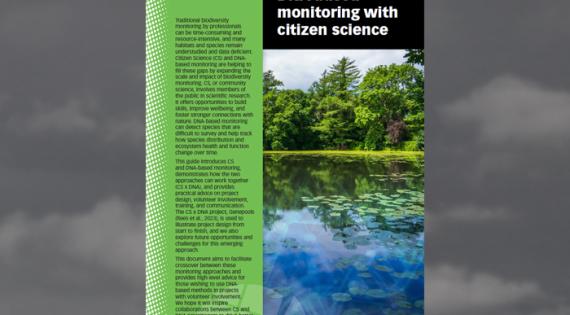
CSxDNA guide cover image

A practical guide to anyone considering running a citizen science project involving environmental DNA monitoring

The new guide from UKEOF aims to equip people with the tools and knowledge needed to harness the collective efforts of citizen scientists and leverage cutting-edge DNA technologies for biodiversity monitoring.

It highlights practical considerations for those deciding whether to utilise a combined citizen science and DNA approach, including the following sections:

  1. Introduction to Citizen Science and DNA – an overview of both methods and how and why they are combined for biodiversity monitoring.
  2. CS x DNA projects – examples and considerations with running projects, including training and communication.
  3. Considering volunteers – what motivates volunteers and tips for engagement
  4. CS x DNA project design – steps of designing a CS x DNA project, illustrated with a worked example from the GenePools project.
  5. The future of CS x DNA – how technological innovations and global networks are set to transform this area.
  6. References and resources – containing some useful internal and external resources for further information.

Further information